Lee’s Summit continues to attract exciting new businesses, and one of the latest additions is the newly opened Smalls Sliders. Officially opening this past week at 210 SW Oldham Parkway, this

Dated: June 5 2024
Views: 284
In the digital age, buzzwords like "blockchain" often make headlines, promising revolutionary changes across industries. But what exactly is blockchain, and why is it considered such a game-changer? Let's break it down in simple terms.

At its core, blockchain is a type of digital ledger technology. Imagine a ledger book used in accounting, but instead of being written in ink and paper, it's digital and distributed across numerous computers worldwide. This digital ledger records transactions in a series of blocks, which are linked, or chained, together in chronological order.
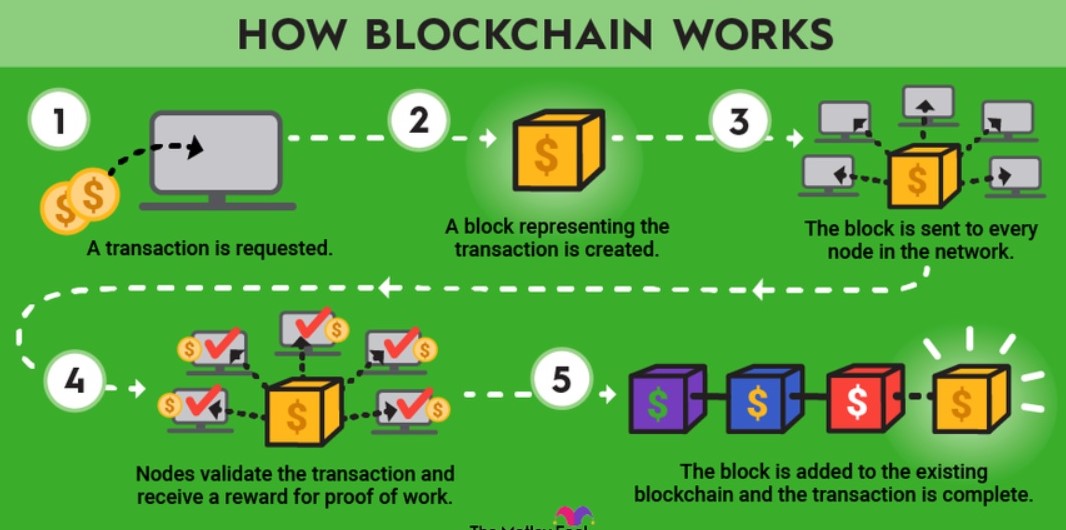
Photo courtesy of The Motley Fool
Decentralization: Unlike traditional databases controlled by a single entity, blockchain operates on a peer-to-peer network. Each participant, known as a node, has a copy of the entire blockchain. This decentralization makes it more resilient to failures and attacks.
Transparency: All transactions recorded on the blockchain are visible to anyone with access to the network. This transparency ensures accountability, as every transaction can be independently verified.
Immutability: Once a transaction is added to the blockchain, it cannot be altered or deleted. This immutability is achieved through cryptographic hashing, which secures the data and makes tampering practically impossible.
Security: Blockchain uses advanced cryptographic techniques to secure data. Each block contains a unique code called a hash, which is generated based on the data in the block and the hash of the previous block. This chaining of blocks adds an extra layer of security.
Here's a simplified step-by-step process of how a blockchain transaction works:
Transaction Initiation: A transaction is requested, such as a cryptocurrency transfer or the recording of a contract.
Verification: The transaction is broadcast to a network of nodes. These nodes use algorithms to verify the transaction details.
Block Creation: Once verified, the transaction is combined with other transactions to create a new block.
Chain Addition: The new block is added to the existing blockchain in a linear, chronological order. This addition is permanent and transparent.
Completion: The transaction is complete, and the updated blockchain is distributed across the network.
So what does that mean in a practical scenario? Here is an example in terms that will hopefully make sense. Let's say I have a bicycle I want to sell for 10 dollars and you have 10 dollars with which to buy it. We decide to use the blockchain to facilitate this transaction.
Once we initiate the transaction the blockchain searches the unique ID of the bicycle I claim to own and it can tell from the history of the block chain that I am for sure the owner of it, that it was not stolen, and that there are no other claims to the bicycle. Therefore, the blockchain can say with 100% certainty that I am the owner of the bicycle and have every right to sell it to you. It then does the same thing with the funds that you are preparing to pay me with. It can tell with 100% certainty that these funds are legally yours and they are not counterfeit.
It approves the transaction and now I have the funds and you have the bicycle. This transaction was recorded on the block chain so when you go to sell the bicycle in the future, or I want to spend the $10.00 the block chain will repeat the process and verify that everything is correct and that we can both do whatever we want with our assets. And so it goes on and on. The applications for this are plentiful and we are already seeing it in real estate, day to day transactions, money transfers etc. I believe we will continue to see use cases for it increase at an exponential rate.
While blockchain is most commonly associated with cryptocurrencies like Bitcoin, its applications extend far beyond digital money. Here are a few notable examples:
Blockchain technology is still in its infancy, but its potential is vast. As it matures, we can expect to see even more innovative applications across various sectors, fundamentally changing how we conduct transactions and manage data.
In conclusion, blockchain is a groundbreaking technology that offers transparency, security, and efficiency. Whether you're a tech enthusiast or just curious about the digital world, understanding blockchain is essential in today's ever-evolving technological landscape.

As someone who has personally been through the process of buying/selling a home I know how confusing and difficult the process can be without someone working hard on YOUR side to ensure that your inve....
Lee’s Summit continues to attract exciting new businesses, and one of the latest additions is the newly opened Smalls Sliders. Officially opening this past week at 210 SW Oldham Parkway, this
Wonderful neighborhood tucked away in Raytown, Missouri, Wildwood Lakes is a serene, picturesque community offering the perfect balance of tranquility and convenience. Here are the top five features
Well, folks, after a long stretch of waiting, the Kansas City Royals have done it—they’re heading to the 2024 playoffs. Let that sink in. For years, this team has been the definition of
In the digital age, buzzwords like "blockchain" often make headlines, promising revolutionary changes across industries. But what exactly is blockchain, and why is it considered such a game-changer?
 The information displayed on this page is confidential, proprietary, and copyrighted information of Heartland Multiple Listing Service, Inc. (
Heartland MLS
). Copyright 2026, Heartland Multiple Listing Service, Inc. Heartland MLS and Hargrave Realty Professionals do not make any warranty or representation concerning the timeliness or accuracy of the information displayed herein. In consideration for the receipt of the information on this page, the recipient agrees to use the information solely for the private noncommercial purpose of identifying a property in which the recipient has a good faith interest in acquiring. Data last updated on September 27, 2026 5:05 AM UTC
33. Required DMCA Notice
The Digital Millennium Copyright Act of 1998, 17 U.S.C. §512, the DMCA, provides recourse for copyright owners who believe that material appearing on the Internet infringes their rights under U.S. copyright law. If you believe in good faith that any content or material made available in connection with our website or services infringes your copyright, you (or your agent) may send us a notice requesting that the content or material be removed, or access to it blocked. Notices must be sent in writing by email to DMCAnotice@MLSGrid.com. The DMCA requires that your notice of alleged copyright infringement include the following information: (1) description of the copyrighted work that is the subject of claimed infringement; (2) description of the alleged infringing content and information sufficient to permit us to locate the content; (3) contact information for you, including your address, telephone number and email address; (4) a statement by you that you have a good faith belief that the content in the manner complained of is not authorized by the copyright owner, or its agent, or by the operation of any law; (5) a statement by you, signed under penalty of perjury, that the information in the notification is accurate and that you have the authority to enforce the copyrights that are claimed to be infringed; and (6) a physical or electronic signature of the copyright owner or a person authorized to act on the copyright owners behalf. Failure to include all of the above information may result in the delay of the processing of your complaint.
 All information deemed reliable but not guaranteed. All properties are subject to prior sale, change or withdrawal. Neither listing broker(s) or information provider(s) shall be responsible for any typographical errors, misinformation, misprints and shall be held totally harmless. Listing(s) information is provided for consumer's personal, non-commercial use and may not be used for any purpose other than to identify prospective properties consumers may be interested in purchasing. The data relating
to real estate for sale on this website comes in part from the Internet Data Exchange program of the Multiple Listing Service. Real estate listings held by brokerage firms other than Hargrave Realty Professionals may be marked with the Internet Data Exchange logo and detailed information about those properties will include the name of the listing broker(s) when required by the MLS. Copyright ©2026 All rights reserved.
Last Updated: September 27, 2026 5:03 AM UTC
Show More...
All information deemed reliable but not guaranteed. All properties are subject to prior sale, change or withdrawal. Neither listing broker(s) or information provider(s) shall be responsible for any typographical errors, misinformation, misprints and shall be held totally harmless. Listing(s) information is provided for consumer's personal, non-commercial use and may not be used for any purpose other than to identify prospective properties consumers may be interested in purchasing. The data relating
to real estate for sale on this website comes in part from the Internet Data Exchange program of the Multiple Listing Service. Real estate listings held by brokerage firms other than Hargrave Realty Professionals may be marked with the Internet Data Exchange logo and detailed information about those properties will include the name of the listing broker(s) when required by the MLS. Copyright ©2026 All rights reserved.
Last Updated: September 27, 2026 5:03 AM UTC
Show More...
